Empowering Teachers, Inspiring Futures with STEM
When teaching changes, learning follows.

Effective instructional design does not end on paper—it is reflected in students’ eyes and their growing confidence. This is clearly seen in the classroom of Jutatip Rinkaew of Watsuntorn Pichitaram School. She shared “It reminds me a quiet girl in my class who almost never raised her hand. But when she was given opportunities to present more often, and both her peers and I encouraged her to try answering questions, she began to change. When her classmates applauded her, I could see confidence and pride shining through her eyes.” She further reflected “When we give students the opportunity to express themselves without limiting them by gender roles, we discover the potential of many girls that we had never seen before—both academically and in their individual strengths. This helps teachers better understand students through their roles, voices, and collaboration. It also motivates me to become more active in designing learning experiences that truly unlock each student’s potential.” To ensure teacher development aligns with real classroom contexts, the project collected baseline data alongside teacher self-assessments and provided ongoing support through Professional Learning Community (PLC) activities. These created space for teachers to collaboratively observe, analyze, and reflect on their teaching with a focus on gender equity—covering instructional processes, student roles, questioning techniques, group dynamics, and patterns of student participation. Such a process gradually enables teachers to build classrooms where every child has equal opportunities to learn and express their potential.
When lesson design moves beyond textbooks and connects with students’ real lives, the classroom becomes a space of inspiration. One teacher shared “There was a student who was not interested in mathematics because he thought it was too difficult. But when I asked students to share and discuss with their peers, he became highly engaged and could explain concepts fluently. He had experience helping his parents with selling, so he understood profit and loss.” She emphasized an important insight “When students see how mathematics applies to their daily lives, it is no longer just about numbers—it becomes about logic, problem-solving, and reasoning. He has changed significantly, becoming more focused and determined. Even when something seems difficult, he tries his best to overcome it.”
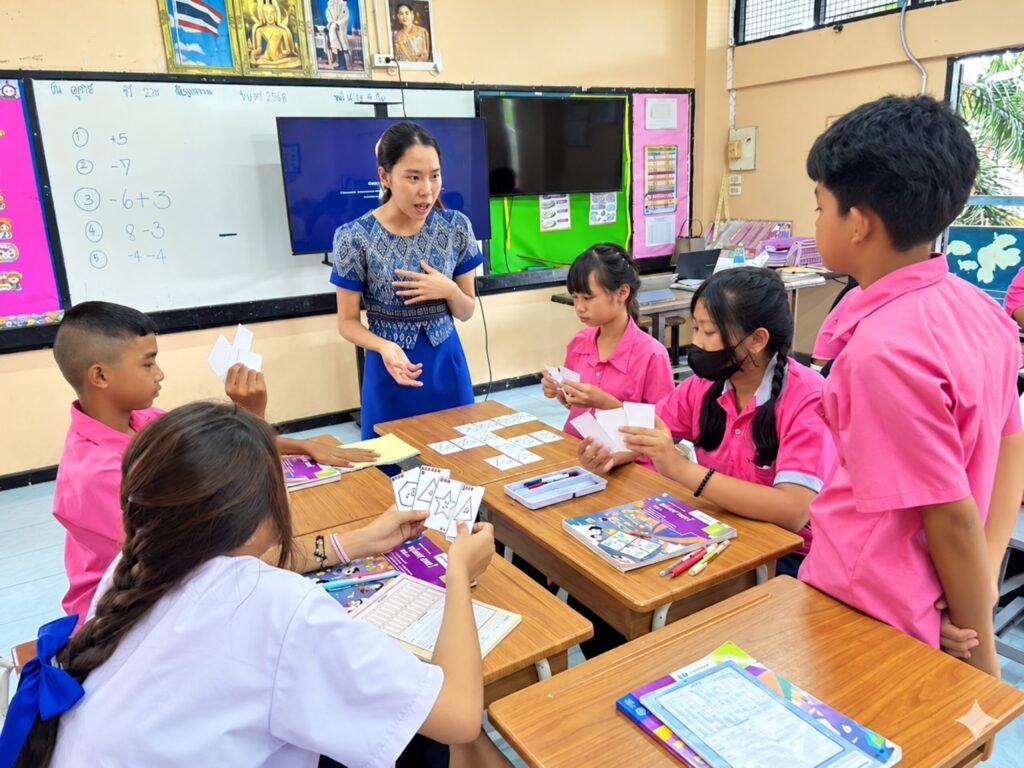
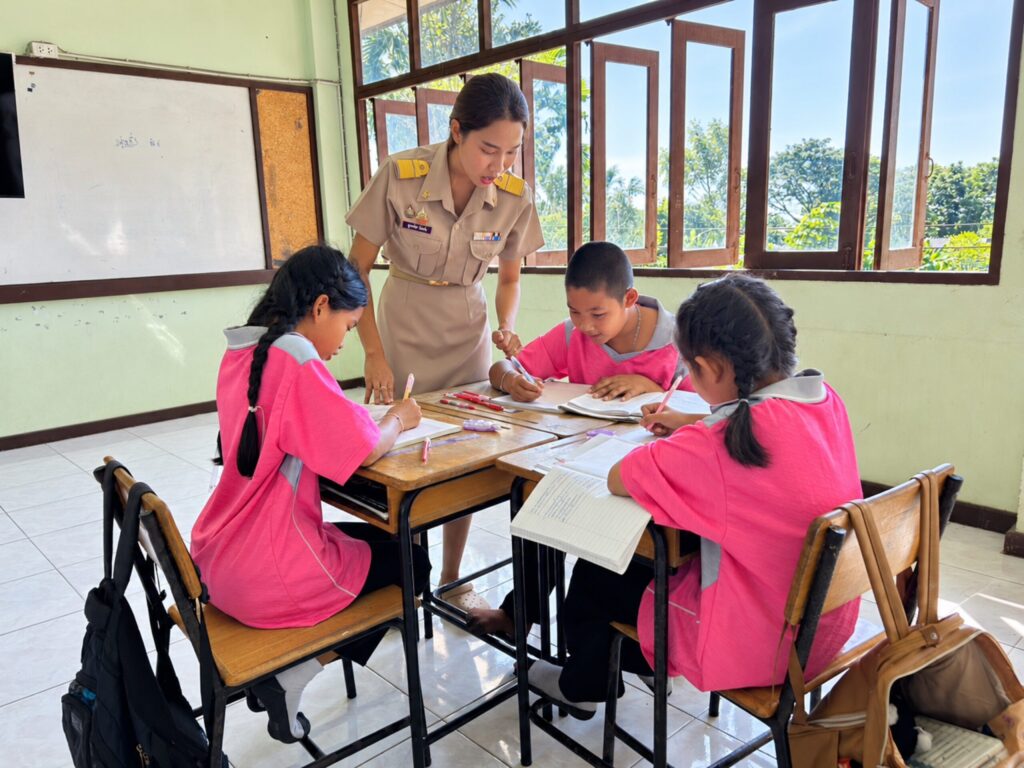
A true sense of ownership in learning does not come from simply telling students to participate—it happens when they are invited to co-design the learning process with their teacher. In Jutatip ‘s classroom, students actively take part in thinking, decision-making, and shaping meaningful contributions. “Some students suggested fairer and more diverse ways of assessment. At times, they proposed random selection, volunteering, and giving quieter students the chance to present. They also raised concerns about unbalanced group work when some groups lacked support.” These reflections show that students are not merely recipients of knowledge—they have the agency to express ideas, identify problems, and propose solutions with reason. These are essential skills for the 21st century.
It brings us back to an important reflection: when teachers shift from being the sole designers of learning to co-designing with students in a more harmonious way, learning becomes a shared experience and a shared ownership. The classroom is then transformed—from a space of knowledge transmission into a space where learning and meaning are truly created together.
From Learning to Flourishing: The Inner Growth of Every Student
Learning comes alive when children are given the chance to ‘do and reflect’, deepening their understanding beyond surface knowledge. Kanittha Thawornsalee from Banpruewaiyai School shared “When we really work together in groups, it’s not just about dividing tasks and working separately. The project becomes like real life—for me and for my friends. Everyone has different roles and importance, but we learn together through sharing and reflecting.” Her words show that learning is not simply about submitting assignments or following instructions—it is about connecting what is learned to real-life experiences. Students practice thinking, planning, and taking meaningful responsibility for their work. This is the starting point of ‘learning design that grows from within’ grounded in real action and experience.
When children work together, they begin to discover their own potential and appreciate the value of teamwork. Kanittha added “I feel good having the chance to be a group leader. I can express myself more, and I realize that I am capable. I’m not afraid of making mistakes because my friends support and understand one another.” Many teachers refelct the same observation: students are becoming more confident in expressing their ideas and more open to listening to others. Those who were once quiet are now helping peers, offering guidance, and ensuring that everyone participates equally. Through this kind of collaborative learning, students experience both leadership and followership—life lessons that cannot be found in textbooks.
As students begin to see others with empathy, their perspective on the world shifts, allowing for deeper learning. Kanittha reflected “Sometimes I notice that some classmates are forgotten or overlooked. I want to help them be part of the work and learning too—just like me, because I used to be shy as well.” Her simple words reflect understanding, compassion, and the courage to do good for others. Learning in the classroom, therefore, is not just about gaining knowledge—it is about growing into a person with a generous and caring heart.
Ultimately, the dedication and efforts of teachers are reflected in their students. Learning that is thoughtfully and collaboratively designed does more than help students understand content—it helps them understand themselves, understand others, and choose to grow with purposeful and meaningful heart.