

From Skills Gap to Skills Advantage: Transforming Thailand’s Workforce for the Future of Manufacturing
Starting the Production Line – Ready for the Transformation
Equipping Teachers with the Skills to Bridge Classrooms and Industry
In response to this gap, Kenan Foundation Asia, with support from CeraVe under L’Oréal (Thailand) Co., Ltd., launched the Care for All: Volunteers for Healthy Skin project to build a “bridge of opportunity” between medical specialists and local communities. The initiative focuses on strengthening the capacity of nurses and Bangkok Metropolitan Administration (BMA) community health volunteers (CHVs) in five pilot locations: Din Daeng, Khlong Toei, Ratchathewi (Makkasan), Prawet, and Khan Na Yao.
Through mobile health outreach conducted in collaboration with the BMA under the “Bangkok Cares: Health for All” program, more than 783 people received skin health screening and consultations directly from dermatologists. In addition, over 582 doctors, nurses, CHVs, and healthcare personnel were trained through online webinars and hands-on workshops, empowering them to serve as frontline providers of knowledge and continuous care within their communities.
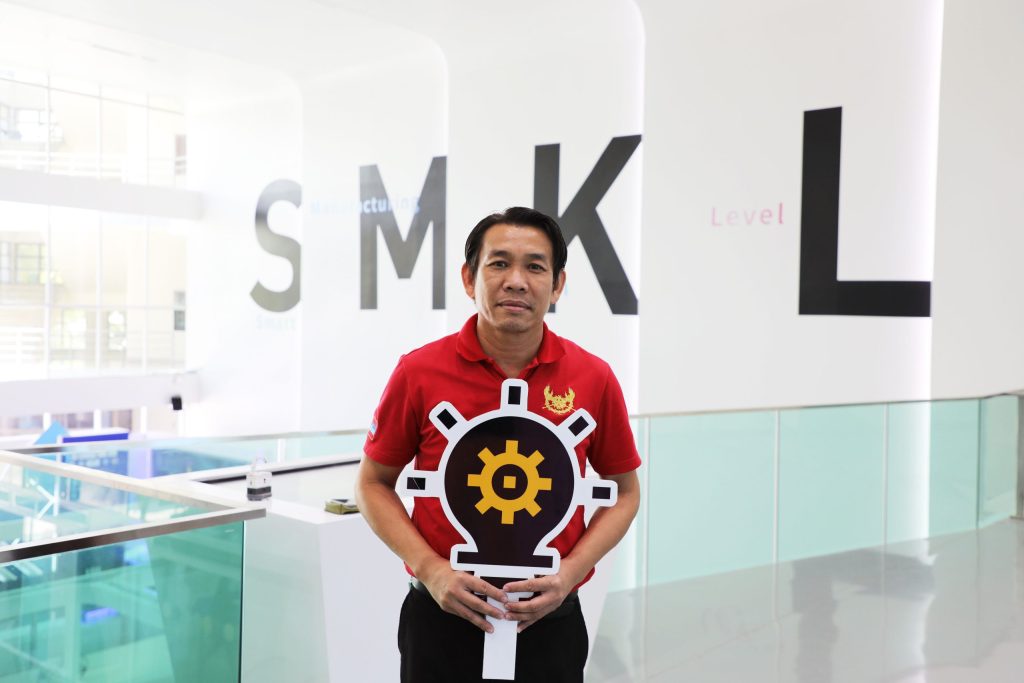
Before the training, I had no knowledge about System Analysis at all. When I started learning about it, I was amazed—I never imagined something like this existed.
Mr. Banchar Panma
Vocational Teacher, Electrical Power Department, Maptaput Technical College
Teachers are at the core of every successful learning journey. The program’s first strategic step was to empower vocational educators with the skills and tools they need to thrive in a changing world. For Mr. Banchar Panma, a teacher in the Electrical Power Department, Maptaput Technical College, the training was more than professional development—it was a transformative experience.
The introduction to System Analysis (SA) opened new doors for classroom innovation. Inspired by the training, he created two PLC training kits with touchscreen controls, bringing industrial concepts to life for his students. Building on this success, he assigned students to develop eight additional kits as part of project-based learning.
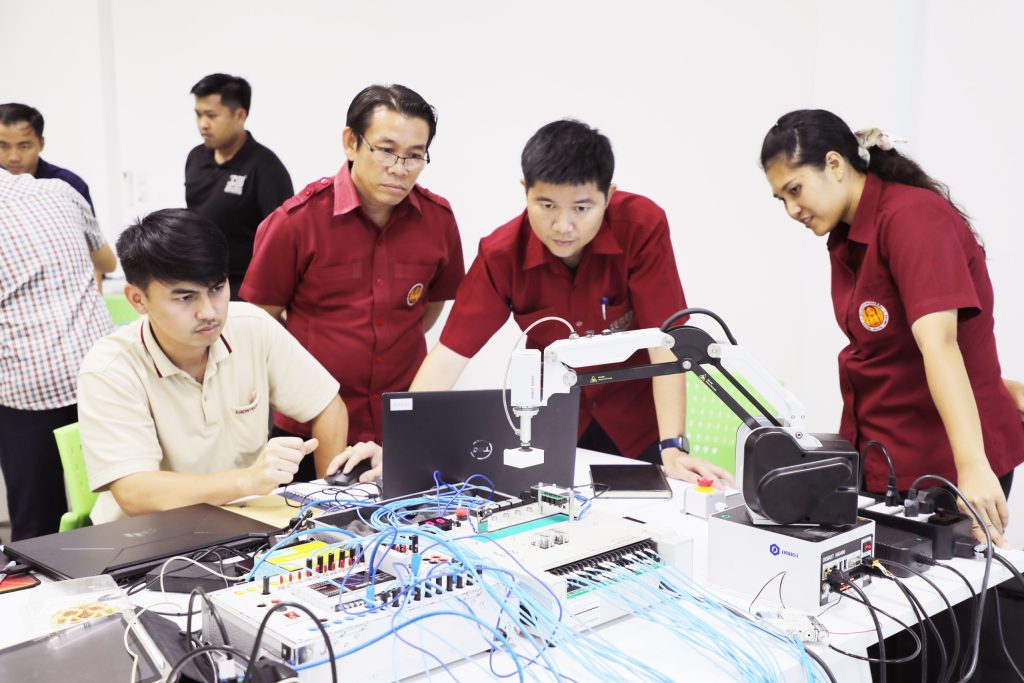
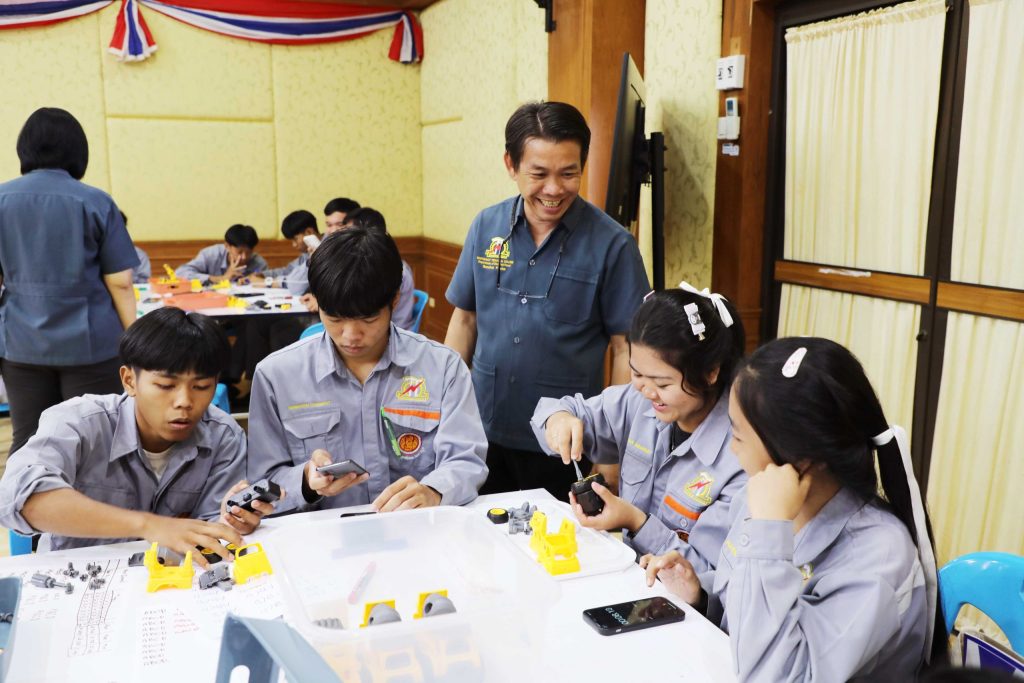
By integrating a simplified SA component into his Industrial Control class, he noticed greater student engagement and a deeper understanding of production workflows. Through hands-on activities grounded in real-world applications, he successfully bridged theory and practice.
“The real challenge lies in adapting the vocational curriculum to the context of each group of students. This program gave me the tools and confidence to do just that.”
He proudly credits the training for helping him innovate his teaching and views teacher-industry collaboration as vital to driving transformational change in vocational education.
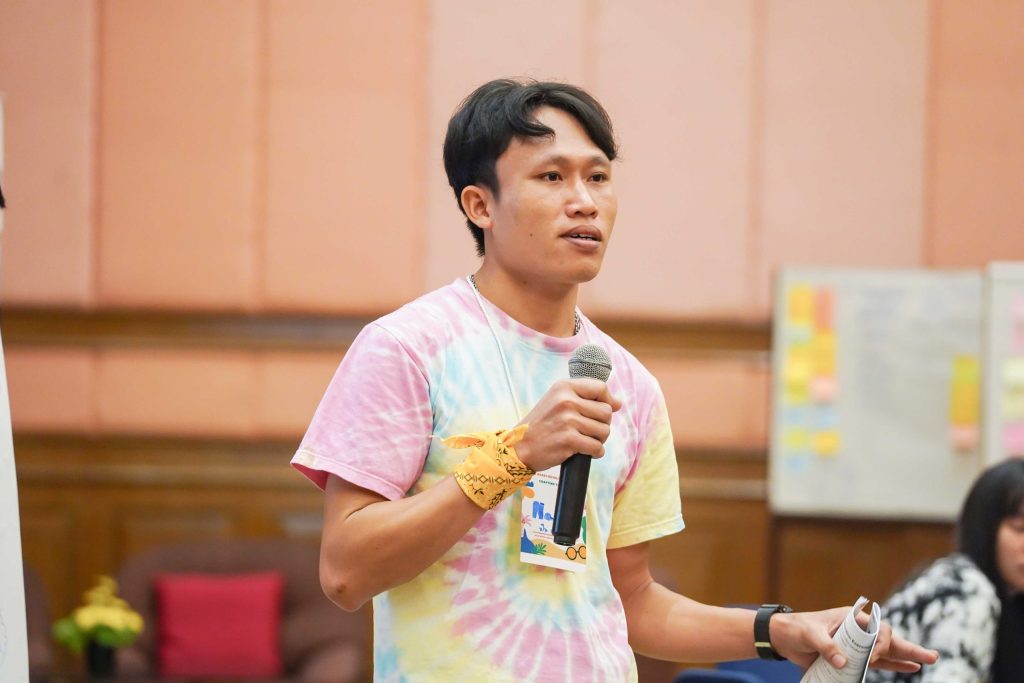
Inspiring Students to Connect Knowledge with Practice
It’s like being a computer that already has the necessary programs installed—all that’s left is to plug in the LAN cable and start receiving data.
Mr. Nattaphon Chaichumphon
Mechatronics and Robotics Student, Sattahip Technical College.
For students like Mr. Nattaphon Chaichumphon, the program served as a vital link between education and the workplace. The training enhanced his technical skills in PLC programming and industrial terminology, giving him the confidence and capability to succeed in a real-world environment.
Beyond technical abilities, he also saw major gains in soft skills like communication, teamwork, and public speaking and presenting, essential in the modern manufacturing world. A visit to a real industrial site helped him visualize the full production workflow, which he then directly applied during his internship.
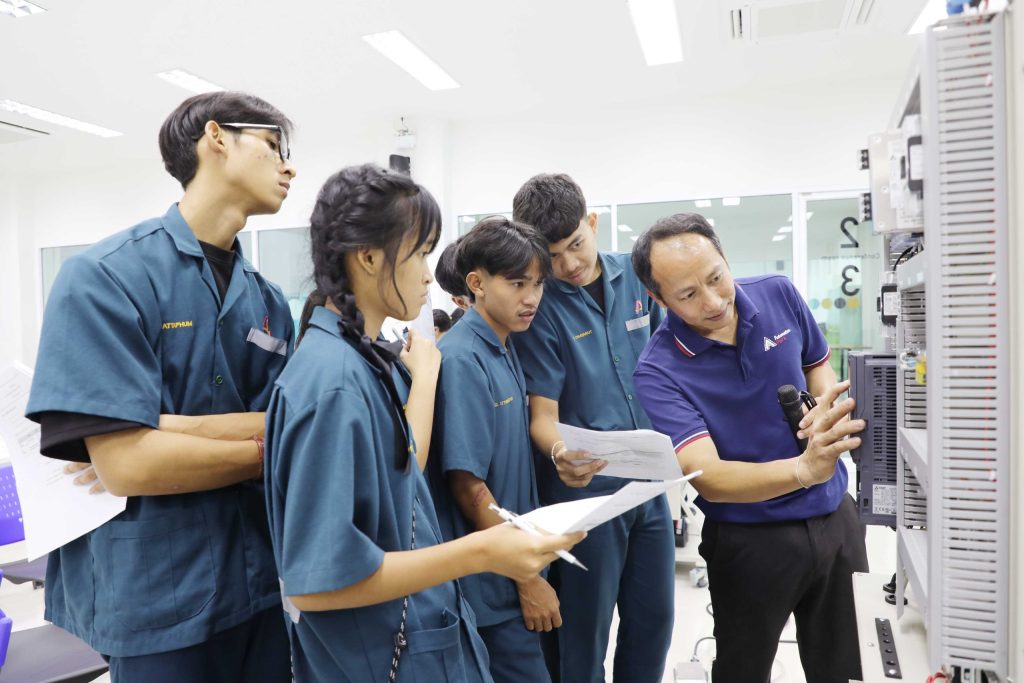
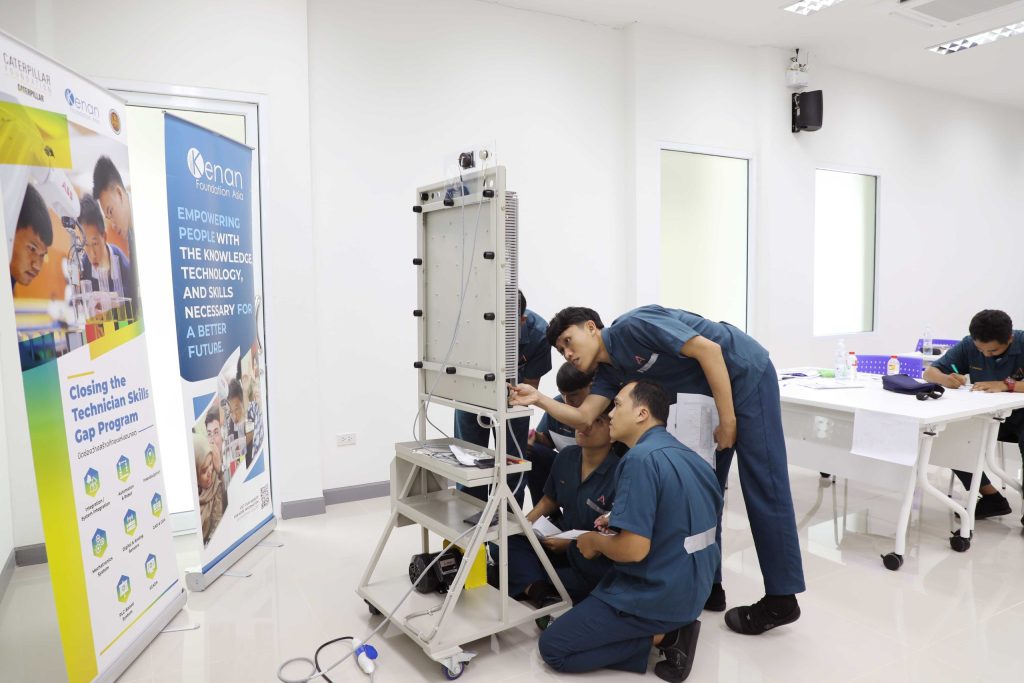
During his internship, he could communicate clearly, perform tasks efficiently, and even earned positive feedback from senior staff. He attributed this to the dual power of classroom learning and the immersive program experience.
“The combination of what I learned in college and what I gained from this program has significantly improved the quality of my work.”
One of the most motivating experiences for him was collaborating with actual engineers and seeing his idea adopted by the team—reinforcing that when students are equipped with the right tools and confidence, they’re ready to contribute meaningfully from day one.
Empowering Technicians with Knowledge for Career Advancement
Many things aren’t as difficult as we think, if we learn and understand the equipment well enough.
Mr. Kittisak Chokoh
Technician
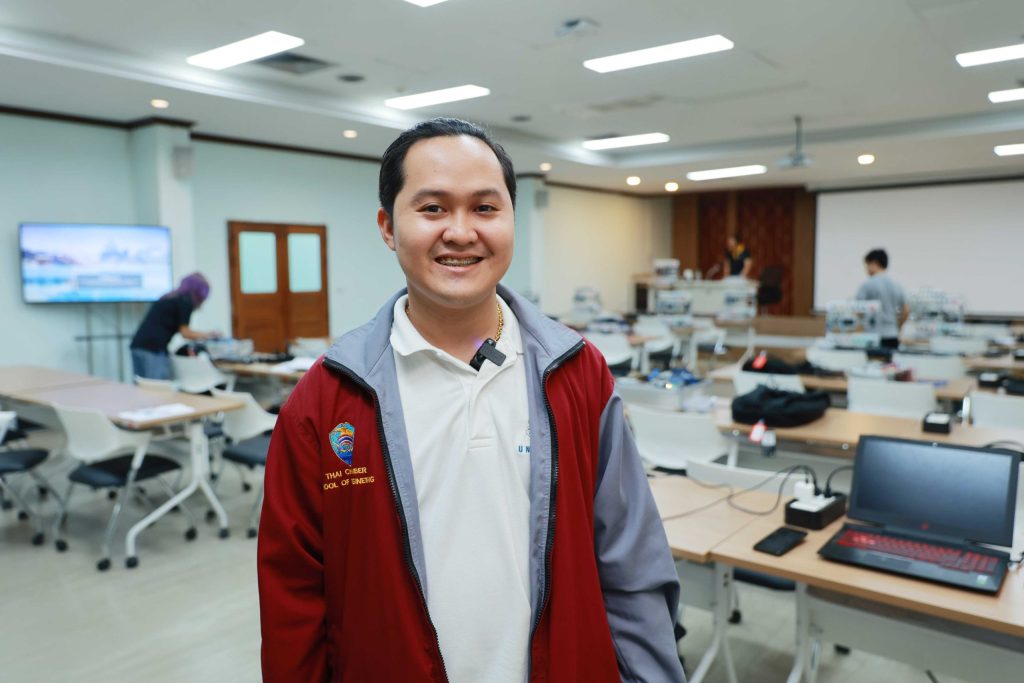
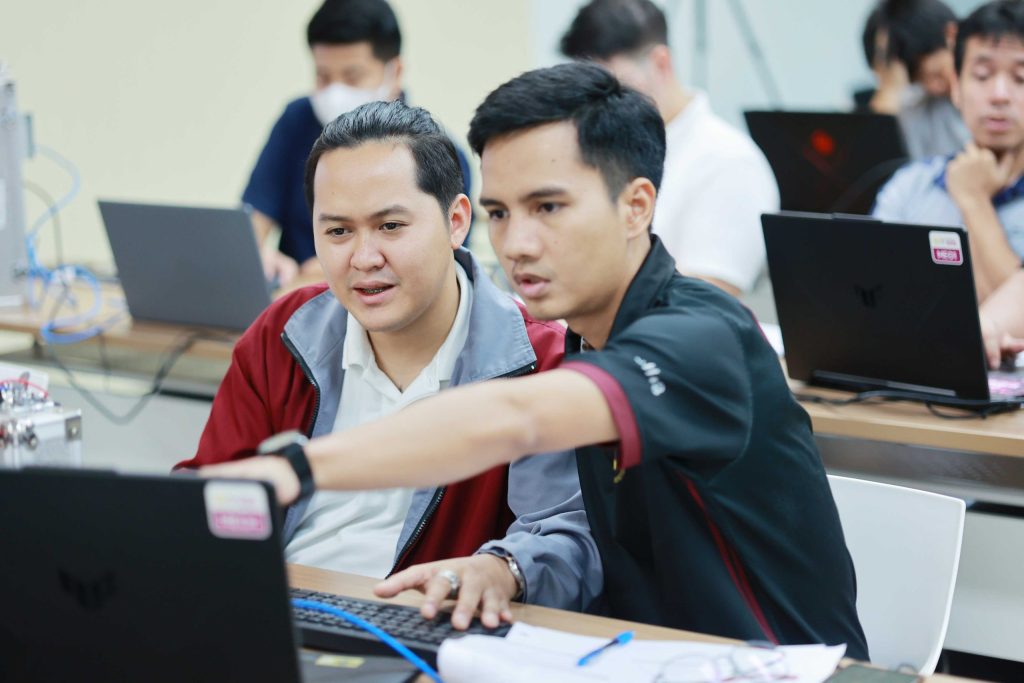
Experienced technicians are the backbone of the manufacturing sector. We recognized their essential role and provided training to upskill and open doors for career advancement. Mr. Kittisak Chokoh, a technician, joined the program to improve his understanding of PLC and HMI systems and to stay relevant in an era of automation and interconnectedness.
The training exceeded his expectations. With newfound confidence, he began applying his skills and knowledge immediately—especially in job interviews, which led to better career opportunities.
“Prior to this program, I was completely unfamiliar with these topics. But now, I feel more confident and fully prepared to work in this field.”
He emerged from the program with not only technical know-how but also a renewed commitment to life-long learning—a mindset that will keep him competitive in the face of rapid technological change.
Ending the Line – From Training to Transformation
These stories—from the front of the classroom to the heart of the production line—underscore the transformative power of targeted, hands-on skills development. The Closing the Technician Skills Gap Program does more than prepare individuals for jobs—it creates a talent ecosystem that powers Thailand’s vision for Industry 4.0.
By fostering collaboration, innovation, and practical learning, this program turns skills gaps into opportunities—for teachers, students, and technicians alike.
As Thailand steps confidently into the future of modern manufacturing, one thing is clear: transformation begins with training—and leads to long-lasting impact.

