

Cultivating Safety Awareness in Aviation Technician Education
In aviation technician classrooms, technical knowledge alone is not enough. Safety is the foundation of every operational step and must be learned from the very beginning—starting in the classroom. For teachers and students in aviation technician and aviation business programs at Khon Kaen Industrial and Community Education College and Don Mueang Technical College, the experience of participating in the Boeing STEM and Technical Education Classroom 2025 Project, implemented through a collaboration between Boeing and Kenan Foundation Asia, has tangibly transformed how safety learning is perceived and practiced.
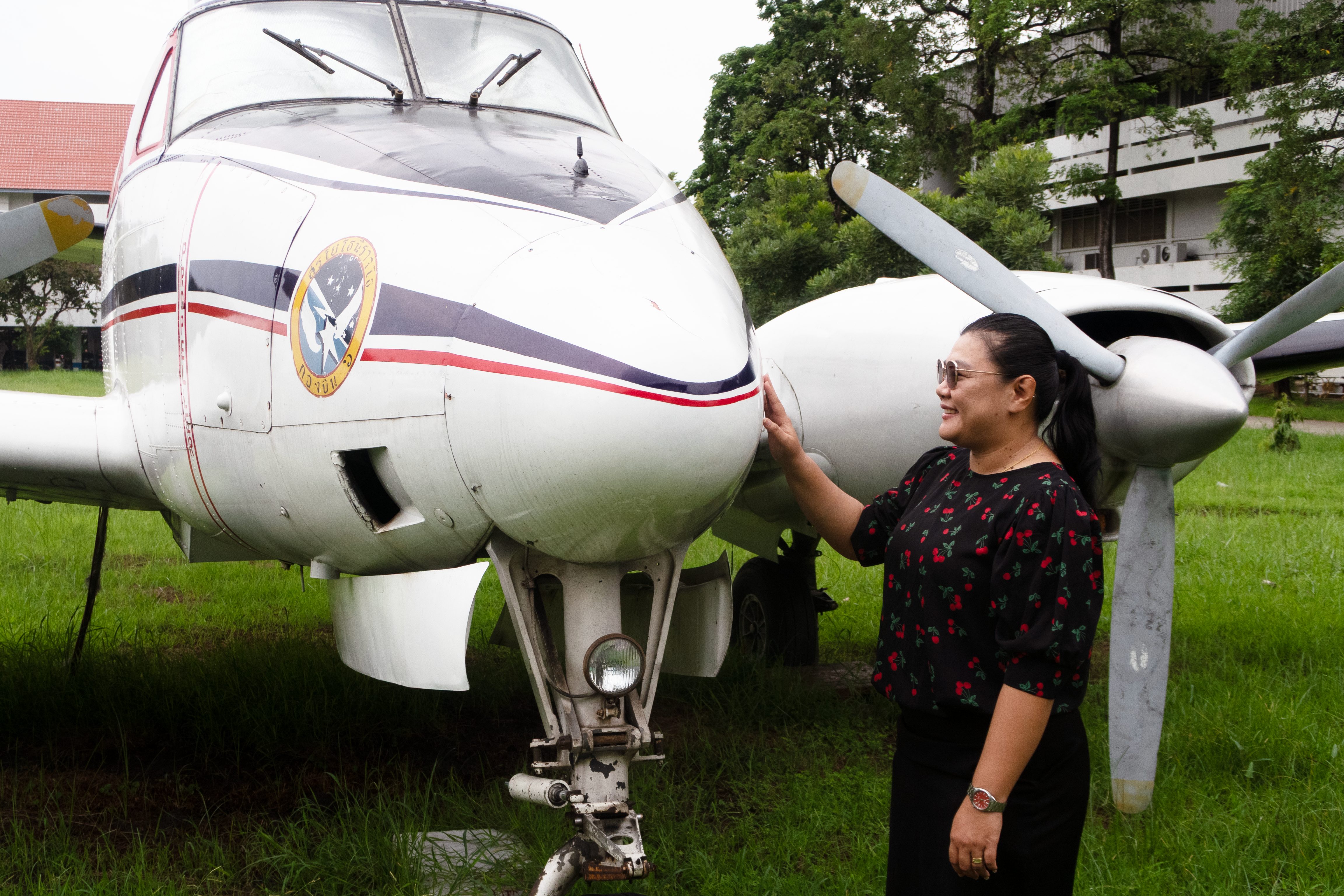
Ms. Anchalee Chanma, an aviation technician instructor at Don Mueang Technical College who teaches Physics in Module 2, explained that before joining the project, safety instruction in the classroom often relied on verbal warnings such as “Don’t do that,” “Be careful,” or “Make sure you protect yourself.” However, these warnings had a limited impact on students’ behavior. Many students could not clearly visualize how small mistakes might lead to serious accidents. As a result, teachers could only repeat cautions without effectively conveying the real-world consequences of unsafe actions.
The challenge of teaching physics in aviation education, therefore, extends beyond explaining formulas or textbook content. It lies in helping students foresee the consequences of errors—how they might affect themselves, equipment, or the surrounding environment. Students need to understand that every force, every movement, and every decision is directly linked to operational safety and can ultimately affect human lives.
The Boeing STEM and Technical Education Classroom 2025 Project introduced a new learning approach—moving beyond text-based instruction toward visual media and learning tools that help students gain a clearer, more comprehensive understanding. The project also emphasizes basic response strategies for different situations. Through learning from real-life cases and scenarios, students are better able to analyze, reflect, and connect lessons to the working world. Safety is no longer just a list of prohibitions; it becomes an integral part of students’ thinking and decision-making processes.
After the project was implemented, students showed greater interest in hands-on activities and learning materials than in text-only lessons. Experiential learning stimulated engagement and encouraged active participation. Students began to recognize that safety is not merely about being warned but a shared responsibility of every practitioner.
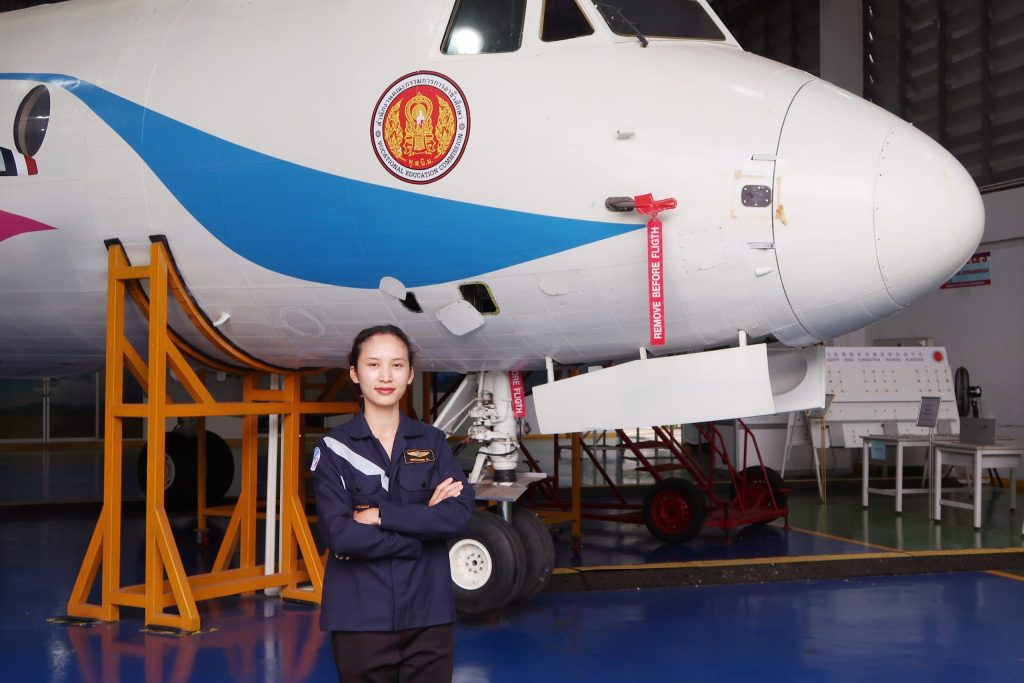
From another perspective, Ms. Parnchanok Moonmungkhun, a vocational instructor at Khon Kaen Industrial and Community Education College, emphasized that safety principles are the core of the aviation technician profession. Each year, injuries and damages continue to occur during aircraft maintenance. She expressed her concern that she does not want her students to encounter accidents once they enter the workforce. As a result, she focuses on teaching students to observe their surroundings—reading warning signs, understanding work zones, recognizing restricted areas, and knowing which spaces are safe to enter or should be avoided. These are essential safety skills that cannot be learned from textbooks alone.
Under the Boeing STEM and Technical Education Classroom 2025 Project, teachers were able to integrate safety knowledge into their teaching in a much more concrete way. Rather than relying solely on verbal warnings, lessons were linked to situations students are likely to face in the future—risks to themselves, teamwork with others, and working in unfamiliar environments such as internships or real operational sites.
Teachers also reflected on the environmental dimension of the aviation industry, which has increasingly shifted toward the use of composite and synthetic materials, such as carbon fiber, instead of metals or natural minerals. This transition helps reduce natural resource consumption and environmental impact. As a result, students are learning about safety alongside environmental responsibility.
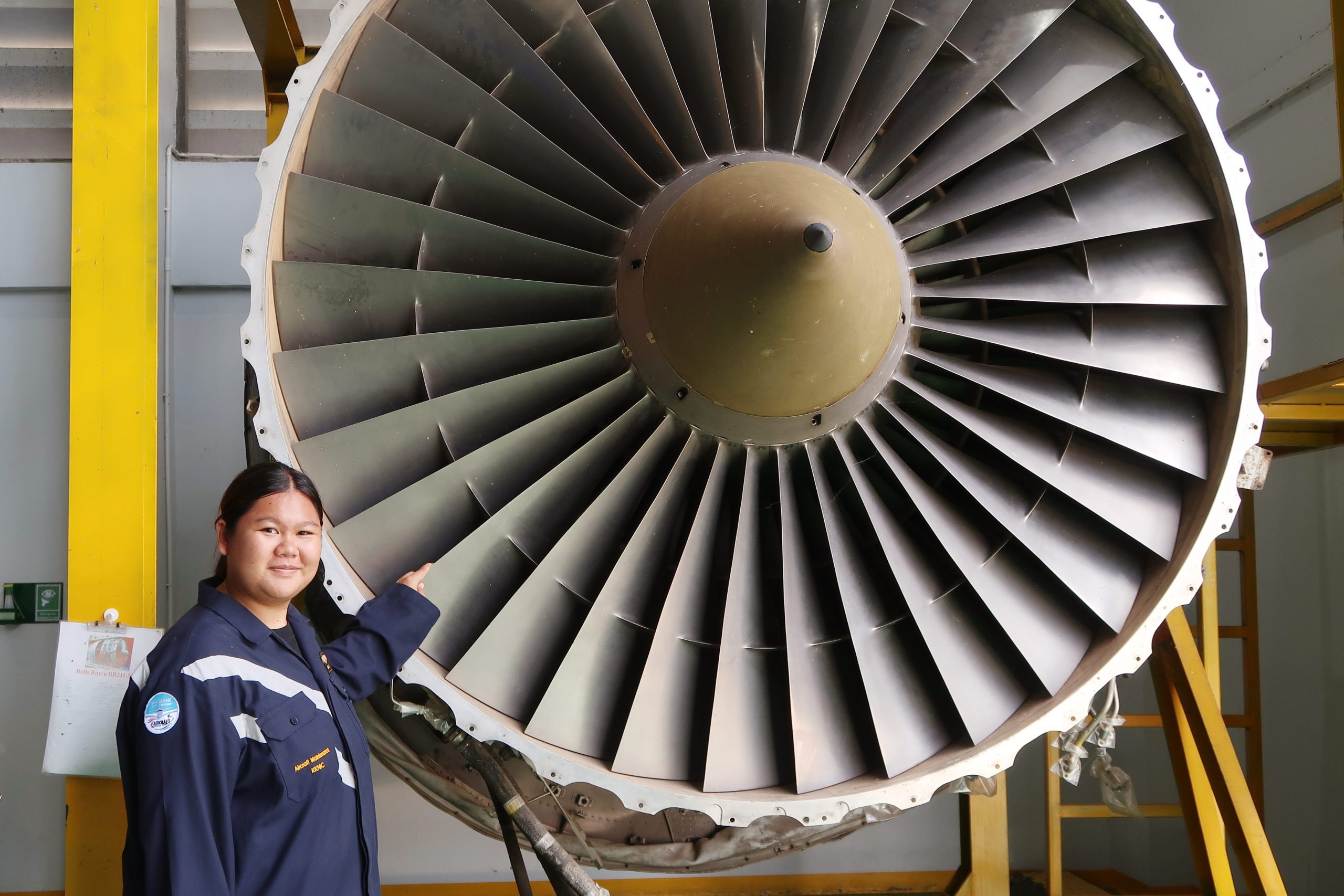
One particularly valuable activity highlighted by teachers was the introduction of root cause analysis tools, such as Fishbone Diagrams and the 5 Whys method, into classroom instruction. These tools allow students to systematically analyze the causes of workplace injuries or accidents. This structured learning approach helps students understand the origins of risks and develop more effective prevention strategies.
Student voices further illustrate the project’s impact. Ms. Araya Khamdeeboon (May), a first-year Higher Vocational Certificate student in the aviation technician program at Khon Kaen Industrial and Community Education College, dreams of becoming an aircraft maintenance technician in Thailand capable of handling comprehensive maintenance tasks. For May, safety is always the top priority, as accidents can happen at any time, and mistakes may affect not only oneself but also colleagues and passengers. Despite challenges related to language skills and concerns about her technical abilities, learning through real case studies and project-supported materials has made the content easier to understand and increased her confidence.
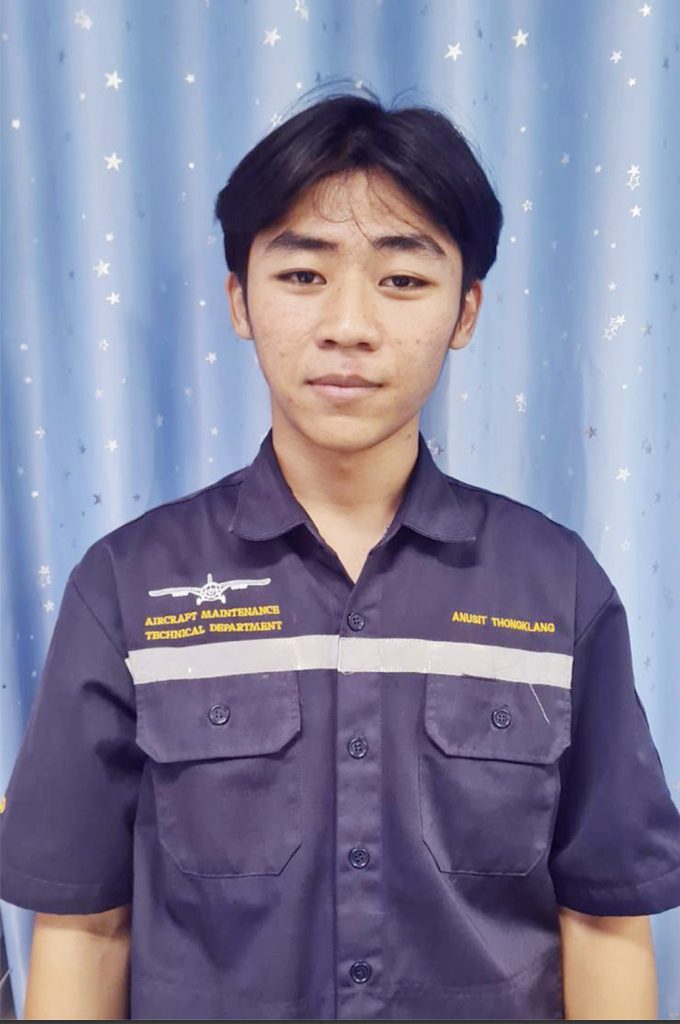
Meanwhile, Mr. Anusit Thonglang (Sea), a second-year aviation technician student at Don Mueang Technical College, shared another learning perspective. Having been interested in aircraft and mechanics from an early age, he chose vocational education to gain hands-on experience. Recognizing the career opportunities, income potential, and professional growth in aviation maintenance, he aims to build a career in the field and advance to an international level in the future. Through safety-focused and scenario-based learning, he realized that passion alone is not enough—without carefulness and responsibility, one cannot succeed in this profession. Safety, therefore, becomes the cornerstone of professional preparation.
When Safety Is Everyone’s Responsibility:
A System That Must Begin in Schools
Looking beyond the classroom, Mr.Buncha Chunsit, Chair of the Joint Public–Private Subcommittee for Workforce Production and Development in the Aviation Industry, emphasized that safety culture in aviation does not happen by chance. It must be systematically cultivated from the very beginning of workforce development.
“Ultimately, the product of the education system is people—
people who are skilled, disciplined, and who prioritize safety above all else.”
— Squadron Leader Buncha Chunsit
As Maintenance Training Organizations (MTOs), educational institutions are responsible not only for transferring technical skills, but also for embedding safety awareness deeply into students’ thinking processes. From a public–private partnership perspective, this project represents an important starting point for building shared understanding between workforce producers and employers. The private sector plays a key role in supporting education to ensure that graduates are ready to work safely from their very first day on the job.
Mr.Buncha stressed that the heart of building a safety culture lies in continuity. Without sustained development, awareness may fade. But when consistently reinforced, safety understanding can grow gradually—from classrooms to workplaces—and take root within the aviation industry over the long term.
The stories of these aviation instructors and students demonstrate that instilling a safety culture at the educational level is a critical foundation for a sustainable aviation industry. Under Boeing STEM and Technical Education Classroom 2025 initiative, the collaboration between Boeing and Kenan Foundation Asia not only enhances technical skills, but also reshapes mindsets—making safety an integral part of learning and real-life professional practice.

